A sales kickoff (SKO) may bring together sellers, managers and colleagues from other teams to review direction, practise and recognize contributions. Start the gift plan by mapping the agenda and attendee groups—not by filling a standard swag list. Then decide what, if anything, helps people participate or gives the event a useful keepsake.
1. Start with what the kickoff needs to do
Write down the event’s purpose in one sentence: align the team on a new plan, practise a sales approach, welcome colleagues, recognize contributions, or bring several groups together. A gift is optional. It should have a clear role if included—such as something people use during sessions, wear as shared team apparel, or take home as a memento.
Salesforce’s sales kickoff guide describes a mix of team-building, recognition, workshops and presentations. That range is a useful reminder that one event can contain different moments; it does not mean every moment needs a branded item. Start from your own agenda and decide where a physical item would be useful.
2. Map attendees and the event format
List the groups involved: sales representatives, managers, new hires, product or marketing colleagues, partners, award recipients and people joining remotely. For each group, note what they need to bring, use or receive—and whether they should receive the same item.
- Who is it for? One shared team, selected award recipients, new colleagues or multiple groups?
- What is the event format? One venue, several locations, hybrid attendance or fully remote?
- When will it be handed over? Before the event, at check-in, during a session, at recognition or afterwards?
For a virtual or hybrid group, decide how remote participants will be included before planning a physical kit. They may use a separate company-approved delivery or office-pickup process. Confirm who collects addresses, communicates with recipients and handles any personal information; these responsibilities sit with the organizer.
See the corporate and employee gifts page for related use cases. A retreat welcome kit has a different agenda and handover pattern; compare it with this company retreat planning guide.
3. Match each item to an event moment
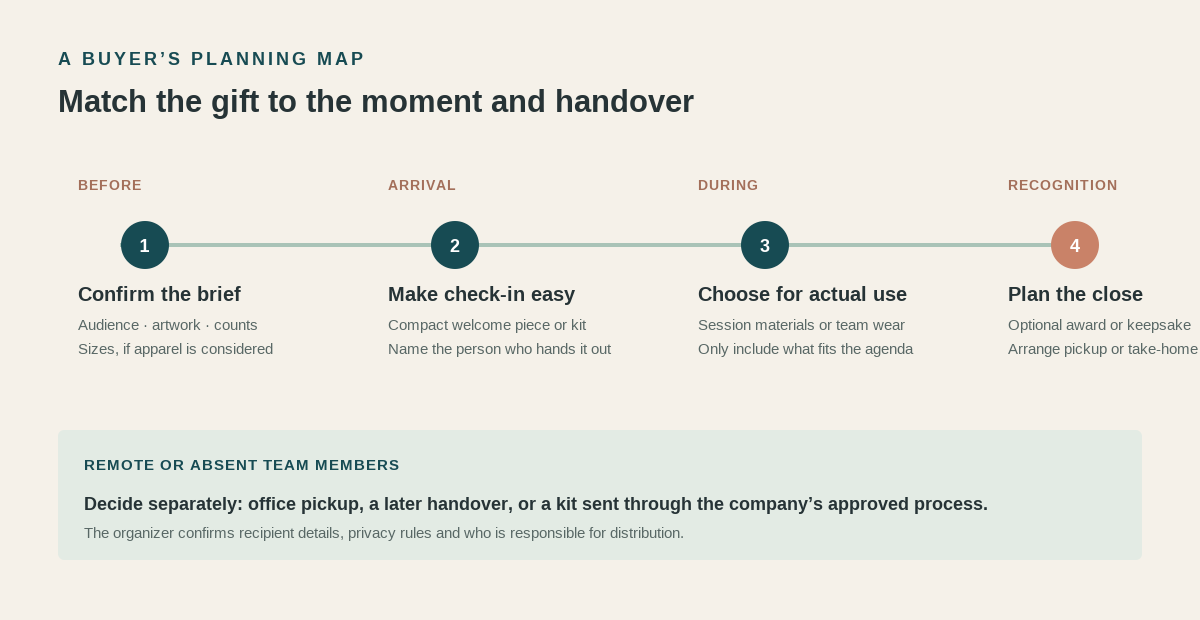
Sort possible items by use, not by product category alone. A welcome item belongs at check-in; session materials should support an actual activity; team apparel introduces sizing and collection work; a recognition piece may be reserved for a specific presentation. If an item does not serve a clear moment, leave it off the list.
- Check-in: Is a compact welcome piece useful while attendees are arriving and moving to the first session?
- During the program: Will the item be used in a workshop or team activity, or would it simply add to what people carry?
- Recognition: Is an award or keepsake tied to a confirmed recognition plan and approved recipient list?
- After the event: Is there a reason to give an item later, and who will manage the handover?
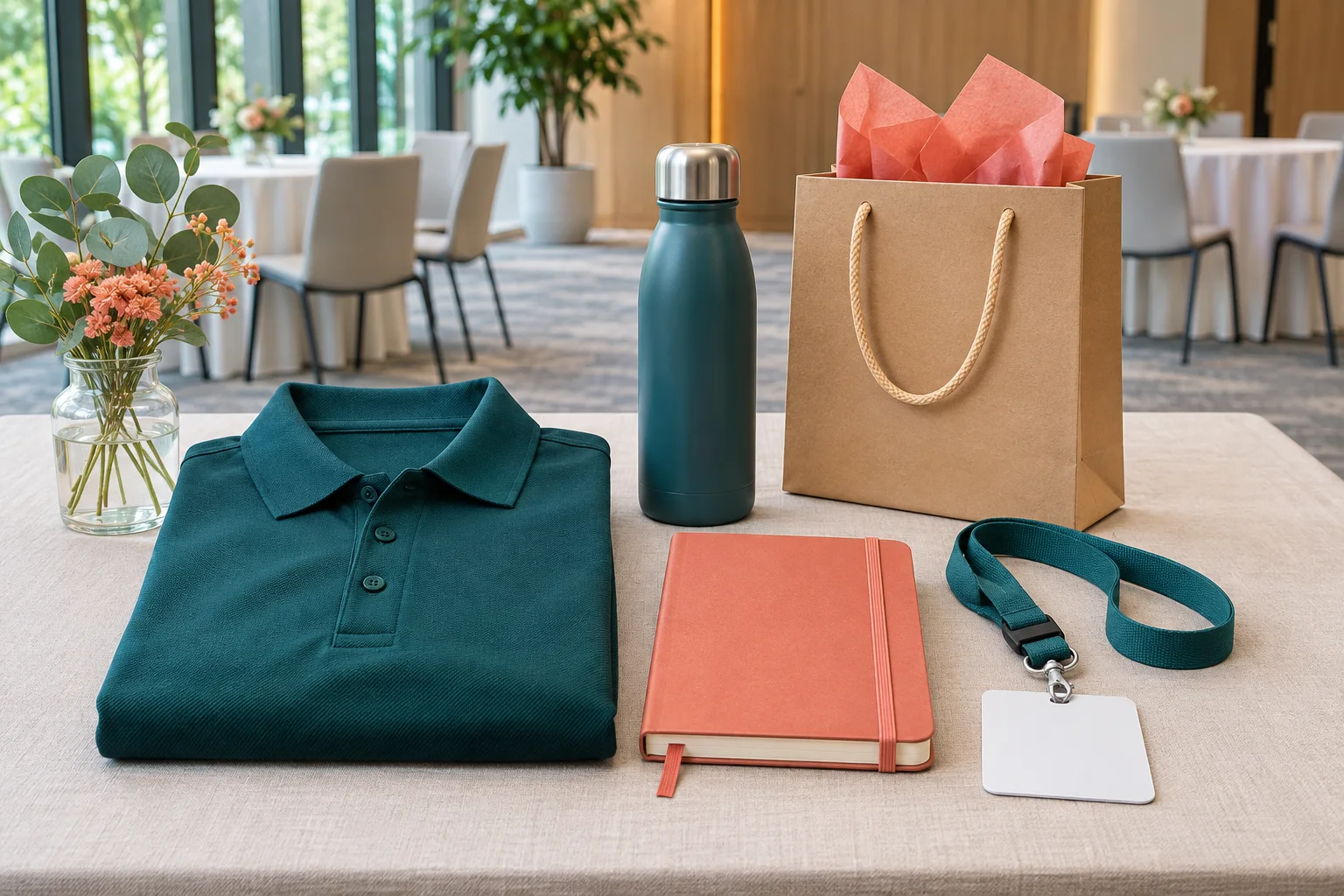
One item can cover more than one purpose, but do not assume a larger kit is automatically more useful. A bag may make carrying easier; drinkware or notebooks and desk items may fit a session; apparel adds size and fit choices; and custom awards or keepsakes fit a planned recognition moment. The selected format, artwork and materials are confirmed for the project.
4. Plan the handover before confirming the mix
Choose the handover route for each attendee group. A venue check-in desk, manager distribution, office pickup and a later handover create different packing needs. Ask the venue or internal event owner what they can actually receive, store or distribute; do not assume that a location will sort named kits or deliver them to rooms.
For apparel or other choices that vary by recipient, set an owner for collecting and approving the information. Keep recipient details limited to the people who need them for packing and handover. For a remote group, confirm whether the company already has an approved process for collecting destinations and distributing items.
Team Sunday’s SKO guide includes venue handover, bulk versus pre-packed distribution and virtual or hybrid attendees as separate planning considerations. Those are useful questions to ask; its products, timeline and delivery terms are specific to that supplier and should not be treated as universal requirements.
5. Confirm the artwork and recognition details
Ask who owns the approved logo, event theme and any partner marks. Confirm the correct files and whether the artwork may be used on the selected item. For awards, verify the recipient names, titles and recognition categories with the internal owner before approving a proof. A second person can check spelling and order before production details are finalized.
Keep the event’s practical information separate from decorative artwork. Agenda changes, venue details and travel notes should come from the organizer’s approved channel rather than being printed on an item that may become outdated.
6. Send a brief that makes the decisions visible
- Event purpose, date range, venue and format
- Attendee groups, approximate counts and remote or absent groups
- Agenda moments where an item may be useful
- Budget range, if available, and any items already planned
- Whether apparel sizes, names or recipient-specific packs are involved
- Artwork files, logo-use approvals and the person who signs off
- Handover location, distribution owner and target arrival date
You do not need to have every choice settled before asking for options. A short description of the occasion and intended recipients is enough to begin a conversation; the customization process explains how product directions, artwork, samples and packing can be discussed.
Sources and scope
This guide uses event-planning resources to frame the agenda and attendee questions. See Salesforce’s sales kickoff agenda guide and Team Sunday’s sales kickoff planning guide. Their specific recommendations and commercial terms are not Evia Gifts product, price or timing commitments.
The decision map and brief above are Evia Gifts planning tools. Product availability, artwork method, sample scope, cost, packaging and delivery details are reviewed against the selected project.
Plan the gift around your sales kickoff
Share the agenda, attendee groups and handover plan. We can discuss product directions that fit the event and the information your team already has.