A launch kit is useful when it helps someone understand, experience or remember the announcement. Start by listing the people who will receive a physical item, what they need from it and where it will be handed over. Then build the gift and packaging around those routes. A digital information pack may be enough for some recipients.
1. Separate guests, press and creators
Event guests may need a light item they can take after a demonstration or at the exit. Press need accurate, approved product information and access to usable media materials; an object should not crowd out those essentials. Creators or partners may receive a different set only if the campaign team has agreed on the recipient list and any disclosure or gift policies that apply. These are planning distinctions, not a rule that every group needs a physical gift.
The Public Relations Society of America’s media-relations study guide distinguishes digital press materials from physical promotional kits and notes that media materials must communicate information effectively. Let the brand or PR team own those facts; use a physical pack only where it helps the recipient.
2. Match the recipient to a task and a handover
- Walk-in guest: remember the launch; a small keepsake or useful handout at the exit, with a staff member responsible for replenishment.
- Press attendee: find approved product facts and images; a clearly labelled information route, with any physical piece handed over after the briefing.
- Creator or partner: receive the agreed product or campaign material; a named pack collected onsite or sent through the brand’s approved process.
- Remote contact: access the digital announcement first; consider a physical follow-up only when the brand confirms the recipient and delivery details.
Use this map to estimate separate counts. Do not treat a media list, event registration list and shipping list as the same list. Ask who can approve each one and who will record the actual handover.

3. Choose items by what they need to do
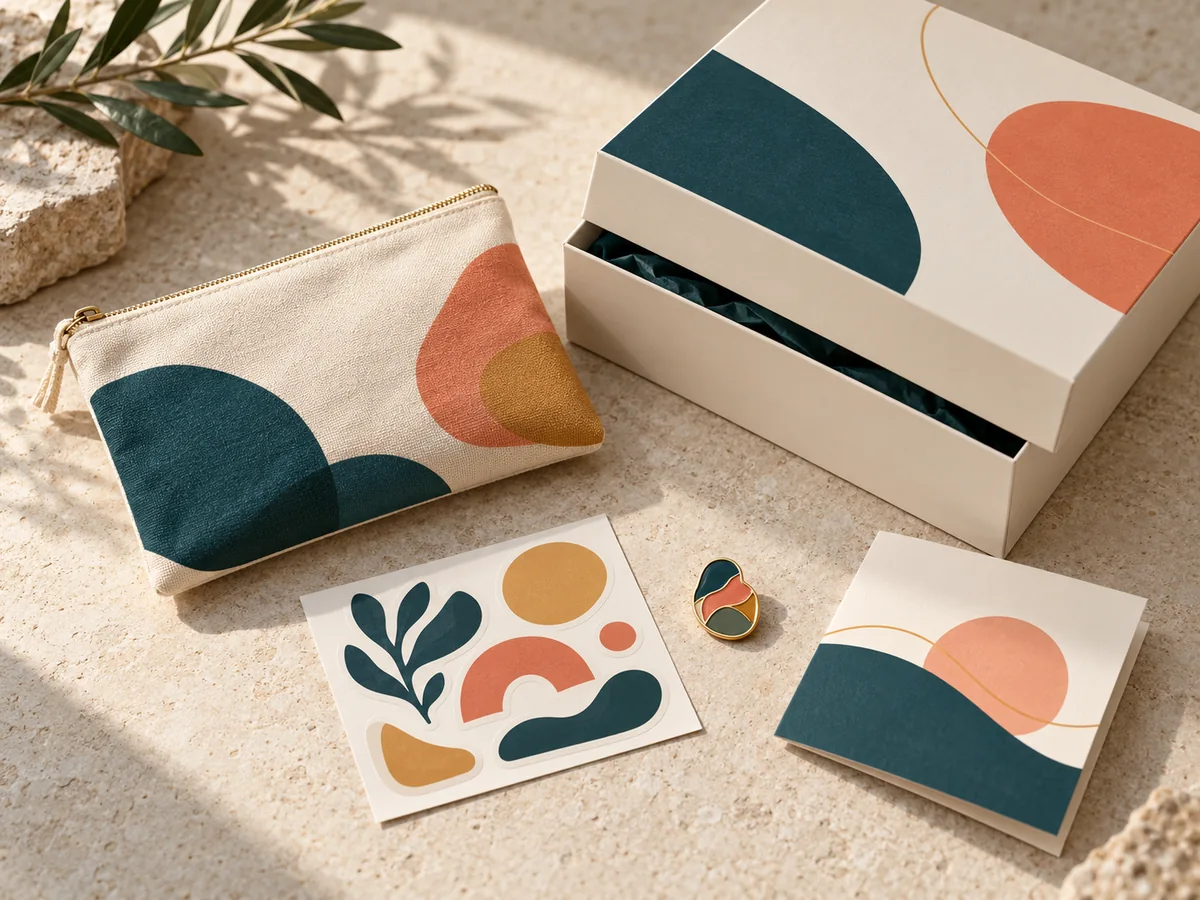
A sticker can identify a mailer or become a small event handout. A pin or badge may work as a compact keepsake. A selected bag or pouch can keep several approved items together. Compare them against the handover: how long someone must carry the item, whether it is mailed, and whether a sample of the launched product is included.
The launched product itself and its technical claims come from the client. Evia Gifts can discuss suitable promotional items and how they might be packed with client-supplied materials. Do not assume every product, print format or custom insert can be made together; confirm the selected combination and artwork for the actual project.
4. Keep product facts and brand assets with their owners
Before designing a physical pack, the brand team should approve the product name, announcement date, logo versions, campaign colors, claims, images and any embargo instructions. The PR team should approve press wording and media access. Ask the event team which materials guests will receive onsite and which are reserved for named recipients.
One approved source for names, product facts and logo files prevents mismatches between a card, sticker and pouch. If third-party marks appear, get the owner's approval for the intended placement. A design preview can show how the items sit together; production artwork is confirmed for the chosen materials and process.
5. Check the version before packing
Put each group’s contents on a packing list. Mark the version of every insert and the person who approved it. A press pack with outdated claims is more troublesome than a plain bag; keep the information easy to replace if launch details change. Review a sample arrangement for fit and presentation, then check the final count and grouping against the approved recipient lists.
For onsite distribution, label cartons by location and recipient group. For any mailing, the brand or agency should confirm addresses, permissions and the chosen delivery route. Packaging and delivery choices depend on the actual contents and destination, so settle them in the project brief rather than assuming one launch-wide format.
6. Send a brief that separates each pack
- Launch name, event date, venue and the announcement owner
- Recipient groups, estimated count for each and who approves the lists
- Purpose of each physical item and where it will be handed over
- Client-supplied launched product, inserts or approved press material, if any
- Gift directions to compare: sticker, pin, bag, pouch or another item
- Approved logos, product names, campaign artwork and sign-off contact
- Packaging versions, carton labels and onsite receiving contact
- Required destination and date; any separately approved mailing plan
You can begin with audiences and handover points even when the item is undecided. Explore the broader Brand Launches & Campaigns page, then share your launch brief to compare physical gift options.