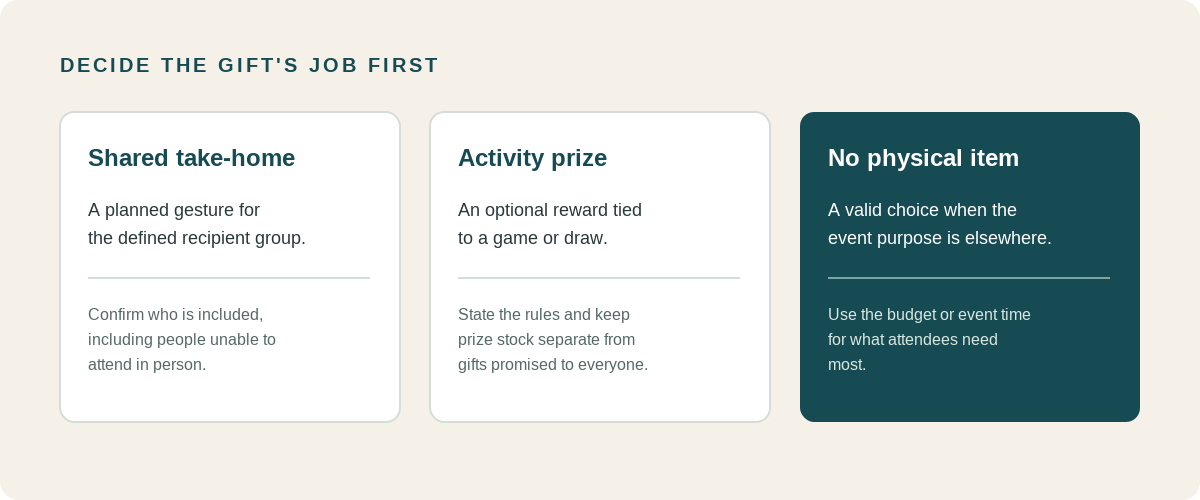
A company holiday party does not automatically need a branded gift. First decide what the event is meant to do and who the item is for. A shared take-home gift, a game prize and an event with no physical item are different decisions, with different recipient lists and handover plans.
1. Decide what the gift is for
Write the party’s purpose in one sentence: thank employees for the year, make space for a team celebration, welcome clients, or mark a particular company moment. Then ask whether a physical item helps with that purpose.
A shared gift is intended for a defined group. An activity prize is optional and goes only to selected participants. A small table favor may simply support the event setting. Do not describe a prize as if everyone will receive one, and do not make participation in a game or contest a condition for receiving a promised team gift.
VistaPrint’s holiday-party planning guide places gifts and favors among many event costs and begins with the event goal. For merchandise planning, that suggests a useful first filter: name the role of the item before reviewing product ideas. A gift is also not required if the event’s main purpose is already served by the gathering itself.
2. Define who is included
List the groups separately before estimating quantities:
- Employees: Is the item planned for the whole team or only people attending the party?
- Guests: Are plus-ones, clients or other invitees receiving the same item, a different favor or nothing?
- People who cannot attend: Will they receive a comparable gesture through an organization-approved process, or is the gift specifically tied to being present?
These are planning choices for the employer. Make the policy clear before ordering so the host is not asked to improvise at the event. Keep personal recipient information within the company’s approved process; do not collect home addresses through an open party signup or supplier inquiry.
Planning a company holiday party gift?Share the event purpose, recipient groups, approximate quantities and how items will be handed over. We can discuss product directions for that brief.
Discuss a holiday party brief →3. Match the item to the event format
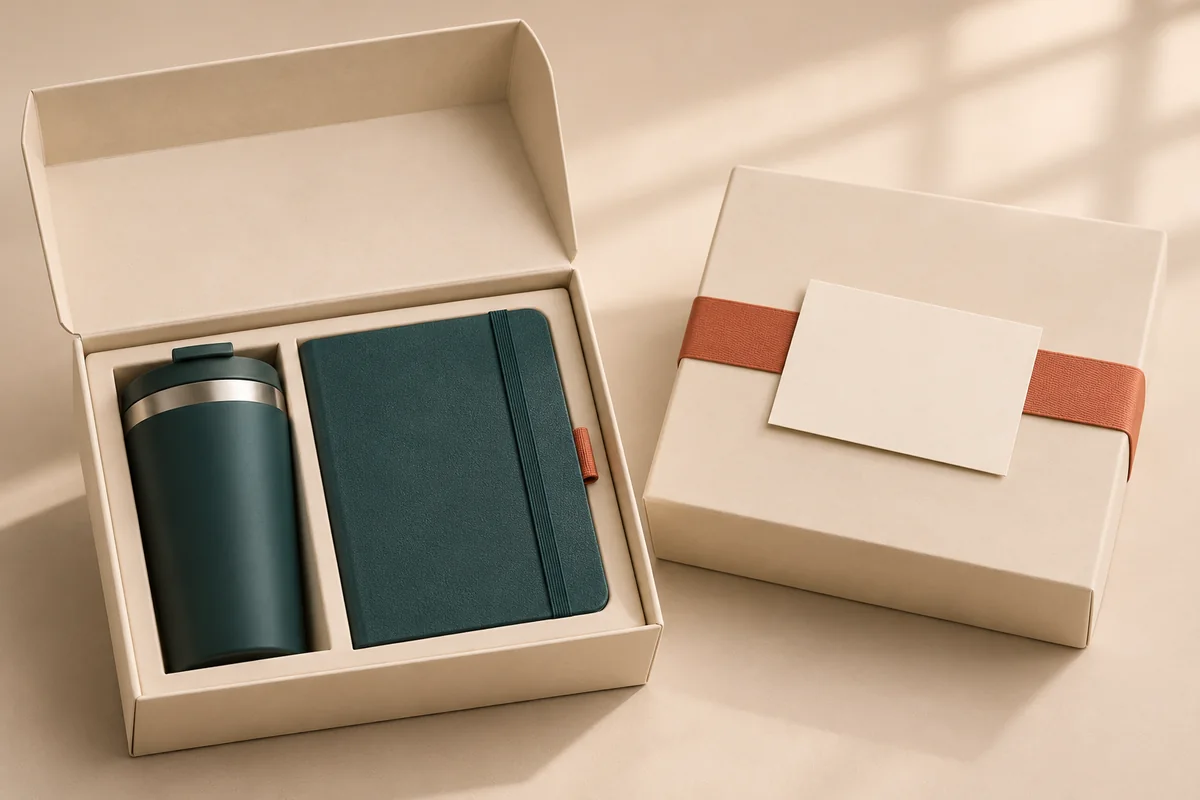
Choose for the way guests will use and carry the item, not only for how it looks with a logo. A standing reception, seated dinner and daytime team activity create different space and carry constraints. Ask:
- Can guests take it home easily at the end of the event?
- Will it be given at a table, at check-in or as people leave?
- Does it need a size, personal name or recipient choice?
- Will the artwork still be clear at the item’s intended scale?
- Would a shared item work for both the party and ordinary use, or is a simple event keepsake more appropriate?
If apparel is considered, confirm how sizes will be selected and who checks the list. For a size-free direction, compare options from drinkware, bags, or office supplies against the event’s purpose and carry plan. These are categories to explore, not a claim that every specific item is available for every project.
4. Plan the handover before ordering
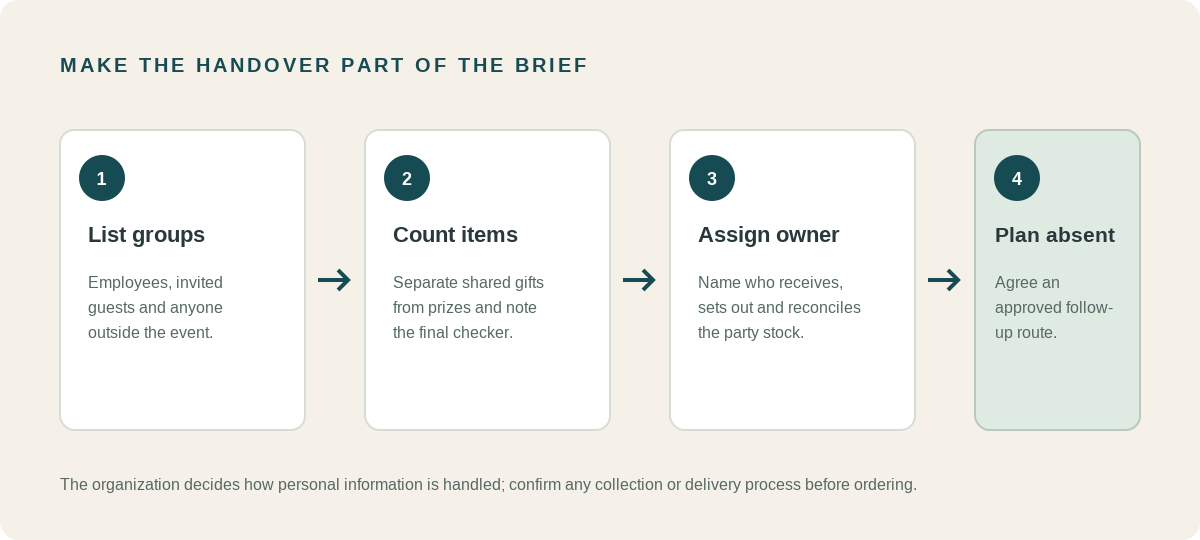
Decide where gifts will be stored, who sets them out, whether they are collected at arrival or departure, and how the team will count what remains. Keep shared gifts separate from activity prizes. A short check-in list can record quantities received, items handed out and remaining stock without asking the host to manage the whole process alone.
For people who cannot attend, decide whether there will be a later pickup, an internal handoff or no physical gift. If the company is considering individual delivery, it should first confirm who is permitted to manage addresses, which destinations are in scope and what delivery timing can actually be supported for the selected order. This guide does not promise individual shipping or a specific arrival date.
Give one person responsibility for the final count and another for artwork or name approval if those are separate tasks. The approver should review the final design and any event date, team name or personalized text before production.
5. Prepare a company holiday party gift brief
- Party purpose, date, venue and event format
- Whether the gift is shared, an optional prize or not required
- Recipient groups and approximate quantities for each
- Distribution point, event-day owner and remaining-stock check
- Approved artwork, event wording, personalization and proof owner
- Budget range and any packaging or presentation preference
- Whether absent employees are included and who approves any follow-up route
- Target in-hand date to confirm against the selected product and project
A business holiday checklist from Staples also calls attention to deciding recipient lists, checking names and addresses, and obtaining approval before purchase. Its month-by-month timings are not a universal production schedule; confirm timing for the selected item and order details.
For broader employee and client gift contexts, see Corporate & Employee Gifts. For individual employee milestone awards rather than a year-end party, see the service anniversary guide.
6. Common questions
Does every company holiday party need a gift?
No. Decide whether an item serves the event’s purpose. A gathering, recognition moment or activity may be enough on its own.
Should a party favor and a raffle prize be the same item?
They can be different. A favor is planned for a defined group, while a raffle or game prize is optional and goes to selected participants. Track and describe them separately.
What about employees who cannot attend?
Decide in advance whether the gift is tied to attendance or whether the organization wants a comparable way to include them. Confirm the company’s own policy and approved handover process.
How early should we request a quote?
Start once the purpose, recipient count, event date, artwork owner and handover plan are clear. Production and delivery timing depend on the selected product and project details, so confirm them before committing to an event date.
Sources and scope
This guide uses the event-goal-first structure in VistaPrint’s holiday hosting guide and the recipient-list and approval prompts in the Staples Business Advantage holiday checklist. Their product suggestions, promotional claims and specific timing are not presented as Evia Gifts facts.
The decision diagram and handover map are original planning aids. Product specifications, minimum quantities, samples, artwork methods, packaging, costs and timing must be confirmed for the chosen project.
Plan a holiday party gift around your team
Tell us who the gift is for, what role it should play and how you expect to hand it over. We can review product directions against the details in your brief.