A useful alumni reunion keepsake is not chosen by age or class year alone. It starts with a memory the group wants to mark, then balances that story with participant preferences, size or portability, artwork permissions and the way items will be distributed. A small printed memory or no physical keepsake can be as appropriate as a wearable or commemorative object.
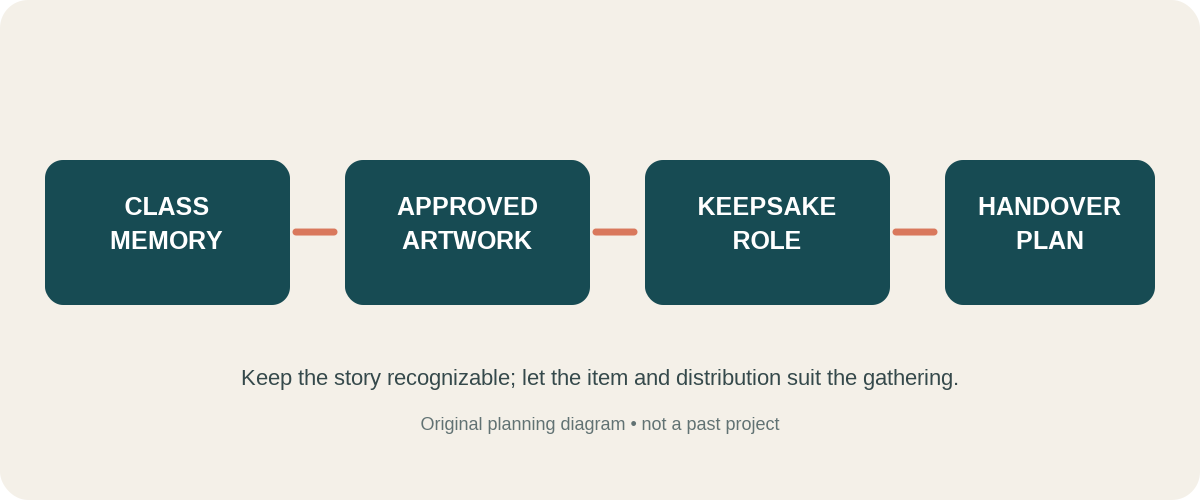
1. Start with a class memory, not just a date
Ask the reunion committee what participants should recognize in the keepsake: a shared place, phrase, campus tradition, class theme, yearbook-era visual or a milestone from the group’s history. Keep the idea specific enough to guide a design, but broad enough to include classmates who had different experiences.
The University of Pennsylvania’s Alumni Class Leadership Council handbook has a reunion-specific section linking a class theme with keepsake selection and event décor. That handbook is written for Penn’s own alumni program; use it as an example of connecting an item to a reunion theme, not as a universal process or product recommendation.
2. Choose for varied participants
A class reunion can bring together people with different tastes, mobility needs, travel plans and levels of involvement. Before selecting an item, consider:
- Whether one shared keepsake is enough or participants should have a simple choice
- How easy it is to carry during travel or alongside other event materials
- Whether sizing creates extra selection, collection or leftover work
- Whether a participant who cannot attend should have a separate option—or no shipment
- Whether names or personal details are necessary at all
Do not assume clothing suits everyone. If apparel is part of the idea, decide whether sizes will be collected through the organizer’s process, whether a size-free alternative is needed and who manages unclaimed sizes. Penn’s handbook specifically notes central campus distribution and discusses avoiding size-dependent keepsakes; that advice belongs to its setting, but it highlights two useful questions for any committee: where will people collect the item, and will fit complicate distribution?
3. Compare wearable, portable and memory-led formats

Choose the format only after the committee agrees on the story and handover. Use this comparison to prompt discussion:
- Wearable apparel: can make a group identity visible during the reunion, but requires fit, optionality and size handling decisions.
- Portable keepsake: may be easier to distribute centrally and carry home; confirm its purpose, design and packaging for the audience.
- Printed or digital memory: can hold a short message, class timeline or approved image without requiring every person to take the same object.
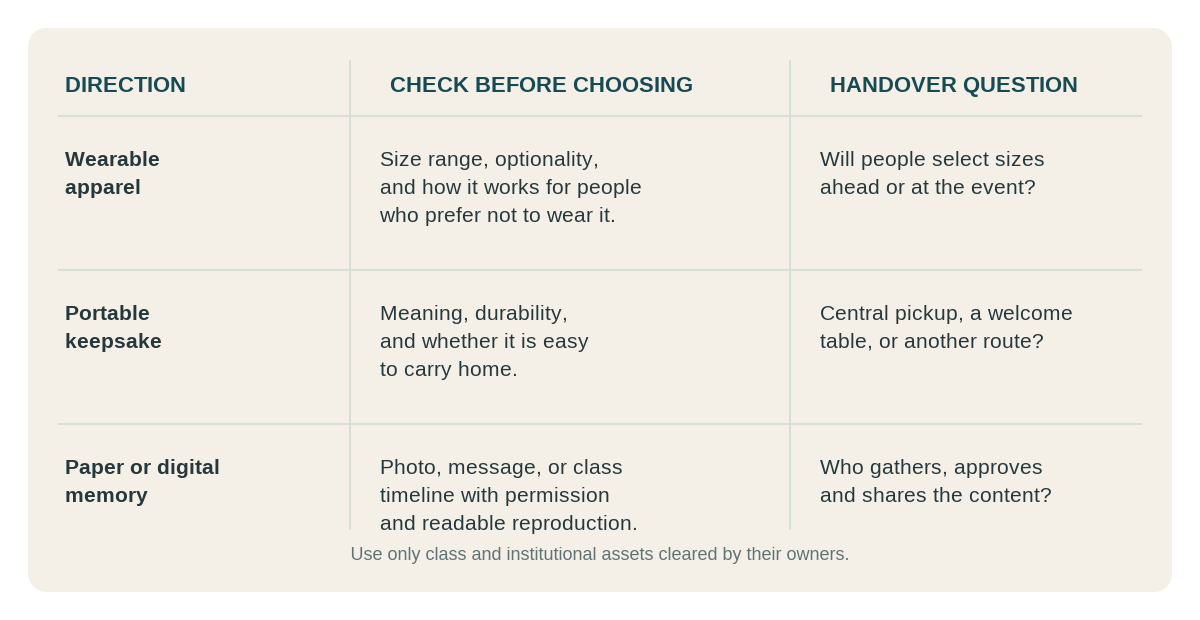
For product directions, review souvenirs and awards, apparel or stickers. These categories are starting points, not a fixed alumni kit.
Planning an alumni reunion?Share the class theme, audience and preferred pickup or delivery route. We can discuss options that fit the approved brief.
Discuss a reunion brief →4. Plan pickup, absent classmates and leftover items
Assign a named owner for each handover step: receiving cartons, checking quantities, setting up the pickup point, recording any remaining stock and deciding what happens afterward. If the event is on a campus or venue, the organizer should confirm whether a distribution table or central pickup location is allowed and accessible.
Decide before ordering whether the committee will hold items for absent attendees, arrange any follow-up collection or simply plan for onsite distribution. Do not collect home addresses or promise post-event shipments until the organizer has approved a process and any costs or destinations have been confirmed.
Keep the distribution method easy to explain in the reunion email: where to collect, when the collection point is open, whether quantities are limited and who to contact about a missing item.
5. Approve the story, names and artwork
Class crests, school marks, archival photos, yearbook images and reunion slogans may have separate owners or permissions. Ask the institution or rights holder to confirm what may be reproduced and where. Verify the milestone year, class details and spelling with the committee; have one person sign off on the final version.
A simple design can still feel personal when its reference is meaningful and correctly represented. Avoid adding names or personal details that are not needed for the keepsake or distribution process.
6. Prepare an alumni reunion keepsake brief
- Class year, reunion date and the memory or theme to represent
- Who will receive an item and whether participation is optional
- Preferred direction: wearable, portable keepsake, printed memory or digital content
- Approximate quantity and any size or language variations
- Approved crest, photo, wording and the person who confirms usage rights
- Pickup point, dates, volunteer owner and plan for unclaimed items
- Budget range, packaging preference and target arrival date, if known
For a different school audience, the school awards ceremony guide focuses on recipient lists and award handover; this page is about alumni identity and shared memories. See also the broader Schools & Clubs occasion page.
Sources and scope
The University of Pennsylvania Alumni Class Leadership Council handbook includes reunion guidance on themes, central keepsake distribution and size-dependent items. It describes Penn’s own class and campus process; its costs, roles and other institution-specific details are not generalized here.
The diagrams are original planning aids. School marks, archival content and names require approval from the relevant owner. Product availability, artwork, samples, packaging and delivery details are confirmed for each project.
Plan a keepsake for your alumni reunion
Share the reunion theme, participant groups and handover plan. We can discuss suitable product directions and the details your committee wants to confirm.